Search This Blog

Showing posts with label school gardens. Show all posts

Friday, October 19, 2012

SCHOOL GARDENS - Providing a wealth of learning opportunities

Yep, school is definitely back in session. We know this because we’ve been getting calls from schools in Santa Barbara County, requesting compost and topsoil to establish, improve and/or maintain school gardens.
 Educational Benefits
A garden has to be designed and laid out, providing a chance to utilize planning and math skills in a group setting. Soil preparation is an opportunity to learn about the importance of soil organic matter, earthworms and general soil ecology. Plant selection and placement require research and more math. As the plants grow, students will have to determine the most efficient way to irrigate and control weeds.
The Value of Sharing
When the garden begins to produce, students are rewarded for their hard work in ways that often leave lasting impressions. In some cases, a portion of the garden crop is donated to a local food bank or other worthwhile agency. Some schools use their harvest in their cafeteria. Others encourage students to share their bounty with family and friends. The common thread that runs through these programs is the joy children derive from sharing their harvest with others.
School Pride
It's known that students involved in any campus project are more likely to have a caring attitude about their school. We know that when students work hard to plan and install a beautiful garden, they develop a sense of pride in their school surroundings that might not otherwise occur.
Field Trips to Engel & Gray Regional Compost Facility
Engel & Gray invites classes to tour our Regional Compost Facility. Please plan for your visit and contact our office at least 30 days in advance. Our field trips are available for grades 3 and up. The approximately one hour tour will include the following:
  • An overview of the compost site
  • A description of the process turning yard trimmings and food scraps into compost and mulch
  • A discussion of the importance of reuse and recycling
  • Promoting the ‘Completing the Cycle’ message
  • Coloring page featuring “Mike Robe – the busiest microbe in the windrow!”
For tour information - please call 805-925-2771
Product Donations
Engel & Gray Regional Compost Facility and Harvest Blend Compost are proud supporters of Central Coast School Garden programs ~ believing there is no better environment than the garden in which to - Plant the seeds of knowledge; experience the joy of learning and harvest a bountiful crop of lifelong learners. Naturally!
Need compost for your school garden? Give us a call @ 805-925-2771 and ask for Jim or Chuck. You can also reach them at Jim@EngelandGray.com or Chuck@EngelandGray.com

Friday, February 25, 2011

Garden Dirt: How to Plan a School Garden

School gardens can provide an environment in which students can learn to work with teachers, parents and neighborhood volunteers while growing plants and learning the relationship between people, plants and nature. The lessons that are taught at the garden site are limited only by one's creativity. School Gardens are a special kind of learning center. Like libraries, they need responsible and knowledgeable people to do all the jobs necessary to maintain them as functional places in which children will learn. They should be seen as permanent additions and must be utilized year-round. Below is a framework you might take into account before starting your garden. A recent survey by the California Foundation for Agriculture in the Classroom found that more than 60% of the students thought that cotton comes from sheep and vegetables come from the store. There is clearly a need for agriculture education for urban students. In addition, gardens create enthusiasm for learning, encourage nutrition and foster team-building.
Step 1 - Form a Garden Committee
As a teacher, you don’t have enough time to do it all. You’ll need a team to work the garden, find funds to support the garden, schedule educational activities, find and train volunteers, research and distribute information. Form a garden committee from a pool of dedicated people with those skills, and you’ll increase the success of your program. Look for volunteers among the school staff, parents, and local community. Or if you know of a gardener, ask that person to volunteer or to recommend another gardener. Find out who is interested in being involved by sending out a flyer announcing a meeting. Personally announcing the meeting to local groups (PTA, Rotary Club, teachers, churches, senior citizen centers, local garden clubs, etc.) is even more effective. Most school sites have websites and Facebook pages – posting your flyer on the internet is a great way to get a response!
Step 2 - Define the purpose and objectives of your garden.
Every school garden must fulfill some need or objective. This is why each garden is unique. All teachers utilize the garden as a learning aid. For some teachers it may reinforce natural science classroom studies. For others it may reinforce social studies. Some teachers may utilize the garden across all curriculums. Whatever your needs are, by addressing these issues, you will have a better understanding of the work involved in this stage.
Step 3 - Layout your students gardening activities
By outlining objectives early on, you will have the opportunity to look at your lesson plans to see when and what types of garden lessons are needed. If you need help finding educational exercises and activities, there are many resources available for teachers. You will need to decide which groups of students will be doing what and when, and determine how bed space will be distributed. The experiences and input from your garden committee will be helpful at this stage. This is your opportunity to schedule certain activities at specific times or assign jobs to your volunteers.
Step 4 - Define a year-round garden plan
You have identified what your garden will be like while school is in session. But now, you need to think about your garden during summer break. The main question is, "Who is going to keep this garden maintained until school starts?" "How do you want the garden to look on the first day of school?" A year-round garden plan will account for any school break. After all, we wouldn’t want all that hard work to go to waste over the summer now, would we?
Step 5 - Choose a permanent garden site and design your garden
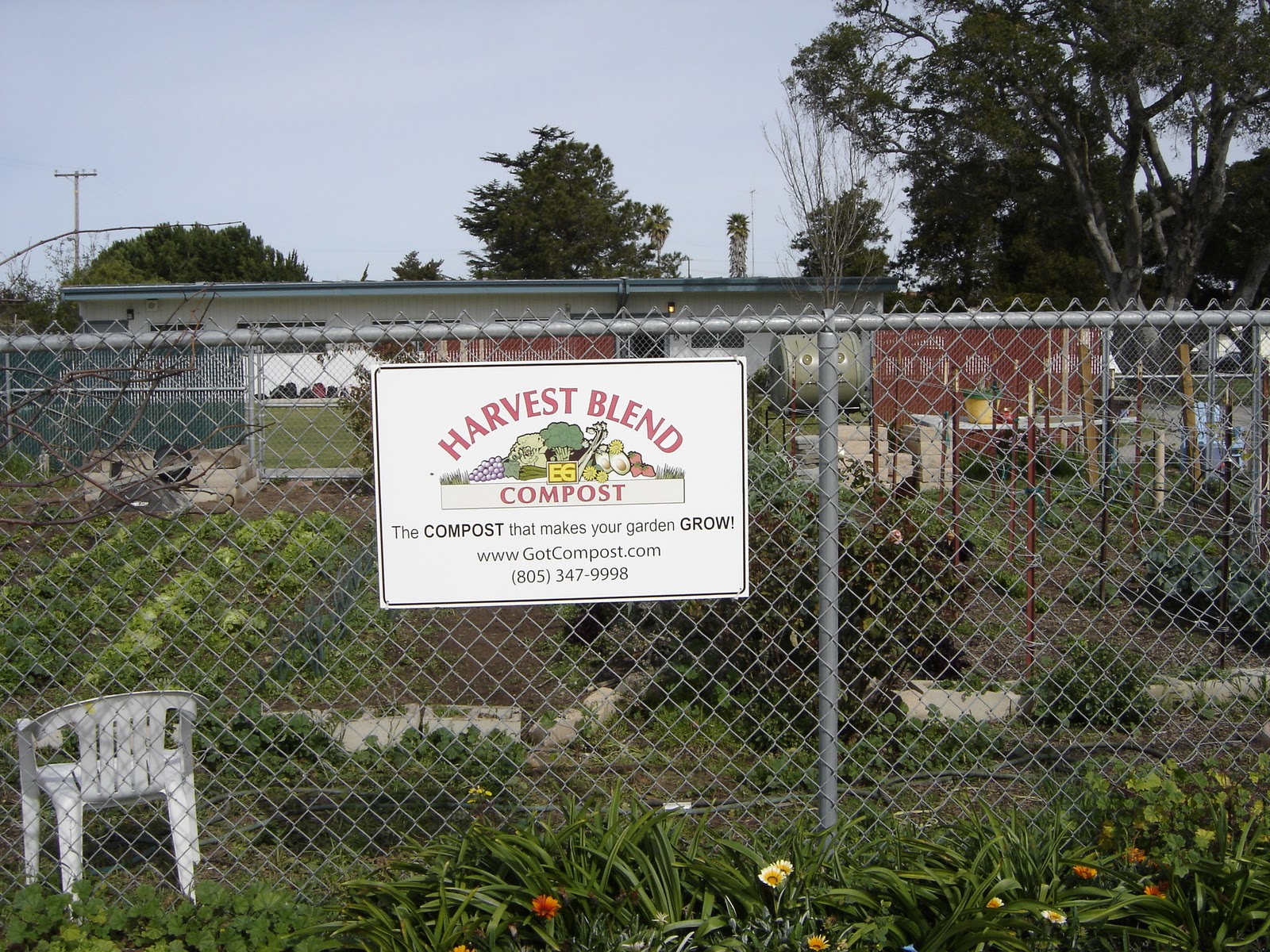
Your garden site should be in an area that receives plenty of sunlight, has good drainage, and is close to water, electricity and is available to students, volunteers and teachers. The site should have enough room for your garden, tool storage, and students. Maintaining a large garden will use up a good deal of time and energy so select a relatively small area. Be sure to start your garden with the best foundation: healthy soil. Amending soil with Harvest Blend Compost will add structure and nutrients to compacted soil, enabling young plants to grow strong and healthy. Compost increases soil porosity and moisture retention.
For more info, visit www.GotCompost.com 
If you need compost to get your garden started, just email us at Info@HarvestBlendCompost.com or EDUCATION@ENGELandGRAY.com
The following concerns should help you decide where plants will grow best:
  • A Vegetable garden needs 5-8 hours of full, direct sun every day for plants to be healthy - Hoses are heavy and often can't be left in the schoolyard. You will want to build your garden as close as possible to a water spigot or hose bib. Or install one near your garden site.
  • Drainage - Most plants will die if they sit in soggy soil. Make sure that the site you choose isn't the lowest place on campus. Watch where water sits longest after it rains and you'll know where you don't want to build your garden. You can build a garden on asphalt by using raised beds. If you are going to use soil that is already on campus, it is important to have it tested by a reputable company. Some vegetables can become unhealthy to eat if they are grown in contaminated soil.
  • Access - The garden needs to be close enough to classrooms that it can be used regularly. A garden that is out of sight is hard to monitor, maintain and enjoy!
  • Tool Storage - Choose a location to store and secure tools. Make sure it’s close to the garden so transporting tools isn't too difficult.
6 - Build your Garden according to plan
Now is when it all comes together - when teachers, volunteers, students and their parents pool their resources and build a positive addition to the school.

Resources:
Need Compost? email Education@ENGELandGRAY.com.

Tuesday, February 1, 2011

Grounds for Learning - Education in the school garden!

Orcutt Jr. High School Garden - growing strong with compost
Do our children know where food comes from? Many would answer McDonald’s, Taco Bell or whatever grocery store their family frequents. Given the fact that our children are facing a health crisis - we need to go back to where food begins: the garden. And if we think about it, aren’t school gardens the perfect learning environment?
For details on Welch’s Harvest Grants visit http://www.scholastic.com/harvest
School gardens are a powerful way to involve our children in a lifelong love of learning. The garden engages students by providing an active environment for students to observe, discover, experiment, nurture, and learn. It is a living laboratory where lessons are drawn from real-life experiences rather than textbook examples, allowing students to become active participants in the learning process. Math and science curriculum are supported in a school garden, while social skills are strengthened as students learn to work together toward a common goal.
And the end product isn’t bad either - healthy food! Produced through cooperation, physical labor and knowledge gained in this outdoor “classroom”, students may choose to share their harvest with the school cafeteria or donate it to a local food shelter. Whatever the final destination, students have created something good where before there was simply a plot of land.
Another lesson to be learned from a school garden is environmental responsibility. Creating a healthy foundation for a growing garden is vital to the garden’s success. To replenish lost nutrients, soil should be amended with compost before planting. Adding good microbes to the soil increases soil organic matter and water holding capacity, delivering oxygen and nutrients to growing root systems. Plants then have what they need to grow strong and healthy.
Now that the garden has produced all this good food and it’s been enjoyed as delicious lunch or dinner, what happens to the food waste? We can “Complete the Cycle” by recycling those scraps, transforming them into compost. We’ll be saving literally tons of room in our landfill while creating a healthy soil product for future crops. Naturally!
For more info, or for help acquiring compost for your garden, contact Info@HarvestBlendCompost.com

Ten Reasons Why School Gardens are an Excellent Idea
1. Magic happens when a child harvests a vegetable he or she has planted and nurtured. The child will want to eat it! It will increase interest and improve attitudes towards eating fruits and vegetables. 
2. Students will learn where food really comes from - a carrot grows in the ground, a green bean on a vine and Brussels sprouts on a stalk! 
3. School gardens foster an increased awareness of environmental issues. They will learn to respect and care for the soil, where our food comes from. 
4. They will get to share their bounty with their classmates. Eating with their peers is one of the most important motivators for children to try new foods. 
5. It gives children an opportunity to be outside and away from computer screens and, at the same time, significantly increase science achievement scores. 
6. They improve self esteem, behavior, social skills and interpersonal relationships as well as help develop life skills including working with groups. 
7. Research shows that hands-on gardening and cooking programs are the two things that are actually effective in behavior change; they get kids to eat more vegetables. 
8. The gardens are beautiful spaces that connect students to their school and help them develop a sense of pride and ownership, which in turn improves attitudes towards school and discourages vandalism. 
9. They provide opportunities for community involvement including neighbors, volunteers, parents, and local businesses. 
10. School gardens promote good nutrition and exercise. The health of our kids and the health of our planet are fundamentally connected.