Tuesday, February 22, 2011
Got Compost: Got Compost: Recyclables, Compostables, Biodegrada...
Got Compost: Got Compost: Recyclables, Compostables, Biodegrada...: "Got Compost: Recyclables, Compostables, Biodegradables, OH MY!: 'Got Compost: You pick up a package in the market. It reads, “Bi...: 'You pi..."


Friday, February 18, 2011
Got Compost: Recyclables, Compostables, Biodegradables, OH MY!
Got Compost: Recyclables, Compostables, Biodegradables, OH MY!: "Got Compost: You pick up a package in the market. It reads, “Bi...: 'You pick up a package in the market. It reads, “Biodegradable”. You buy..."
Recyclables, Compostables, Biodegradables, OH MY!
Got Compost: You pick up a package in the market. It reads, “Bi...: "You pick up a package in the market. It reads, “Biodegradable”. You buy it, thinking you’re doing the best thing for the planet, but are you..."

You pick up a package in the market. It reads, “Biodegradable”. You buy it, thinking you’re doing the best thing for the planet, but are you? The good news is that there are many eco-friendly alternatives to traditional disposable packaging, flatware, cups and cutlery.
The bad news is that the terminology is often confusing and the best disposal method is sometimes unclear. Here's a quick & simple guide to cracking the code:
Recyclable: What does it mean?
'Recyclable' products can be collected and reprocessed to produce new items. Common recyclable materials are: paper, cardboard, plastic, glass, aluminum, and electronic waste. Recycling is very important in diverting waste from landfills.
How Do You Identify Recyclable Products?
Many simple paper and plastic products are marked with the universal “chasing arrows” recycling symbol. Many electrical products (mobile phones, computers, printers, etc.) contain parts and materials which can be recycled by taking the products apart. Other products such as batteries, paints and fertilizers can be specially processed to reduce the environmental impact of their disposal.
For more info, visit www.Earth911.org or www.Lessismore.org
How Do You Dispose of Recyclable Products?
- The easiest way to recycle is through your municipal curbside garbage program, assuming such a program is available. Find out what sorts of materials are accepted through this program, and how the materials should be separated to ensure they are processed correctly.
- Many communities conduct yearly collections of electronic recyclables. For recycled materials which aren't collected curbside, use a service like Lessismore.org to find a local drop-off center.
Biodegradable:
What Does It Mean?
'Biodegradable' simply means that a product will break down into carbon dioxide, water and biomass within a reasonable amount of time in the natural environment. The term 'biodegradable' however has no legal enforcement or definition therefore the term has been used loosely by some manufacturers.
Biodegradability is a desirable feature in products such as cleaning agents. Conventional cleaning agents will often release harmful phosphates and volatile organic compounds (VOCs) as they break down, but biodegradable versions will not.
How Do You Dispose of Biodegradable Products?
Products that are labeled as 'biodegradable' can be disposed of in your garbage. However it is important to remember that landfills lack the microorganisms and oxygen required for waste to biodegrade in a timely manner, so you should still try to minimize your use of items that are not recyclable or compostable.
Compostable: What Does It Mean?
'Compostable' products are biodegradable, but with an added benefit: when they break down, they release valuable nutrients into the soil, aiding the growth of trees and plants. These products degrade within several months in an industrial composting facility and produce no toxic residues.
Compostability is a desirable feature in traditionally-disposable products such as plates, bowls, cups and cutlery. These products are commonly made out of PLA (Polylactic acid), bagasse (sugarcane fiber) or vegetable starch. It is environmentally responsible to use disposable products that are labeled 'compostable' rather than just 'biodegradable'.
How Do You Identify Compostable Products?

How Do You Dispose of Compostable Products?
Products that are labeled 'compostable' should enter an industrial composting facility to fully degrade into organic matter.
Note: Engel & Gray operates the only Regional Composting Facility in Santa Barbara & San Luis Obispo County permitted to handle all organic feedstocks. Since 1993 Engel & Gray Regional Compost Facility located on the Central Coast of California has emerged as an innovative leader in Biosolids and Green Waste recycling, offering services to municipalities, agricultural, and landscape companies and individuals.
Together with the City of Santa Maria and its other partners in composting, Engel & Gray is permitted to recycle 400,000 yards of materials every year – waste that might otherwise end up in our already overused and capacity limited landfills.
If your city has a composting facility, place these products in your compost collection bins to be picked up. Compostable products will typically degrade in 30-120 days in an industrial composter, depending on the product size and material used.
If your city doesn't provide industrial composting, you can dispose of compostable products in your backyard or home composter, but they will take longer to degrade.
Do not put compostables into your recycling! They are not recyclable and will contaminate the recycling process.
Complete the Cycle! When shopping for garden supplies look for recycled and reclaimed materials. When you use Harvest Blend Compost to amend soil or top dress your lawn, you'll be caring for your landscape in the most environmentally responsible way. Naturally!
Tuesday, February 1, 2011
Got Compost: Got Compost: Grounds for Learning - Education in t...
Got Compost: Got Compost: Grounds for Learning - Education in t...: "Got Compost: Grounds for Learning - School gardens are becoming...: 'Orcutt Jr. High School Garden - growing strong with compost Do our chil..."
Got Compost: Grounds for Learning - Education in the school garden!
Got Compost: Grounds for Learning - School gardens are becoming...: "Orcutt Jr. High School Garden - growing strong with compost Do our children know where food comes from? Many would answer McDonald’s, Taco..."
Grounds for Learning - Education in the school garden!
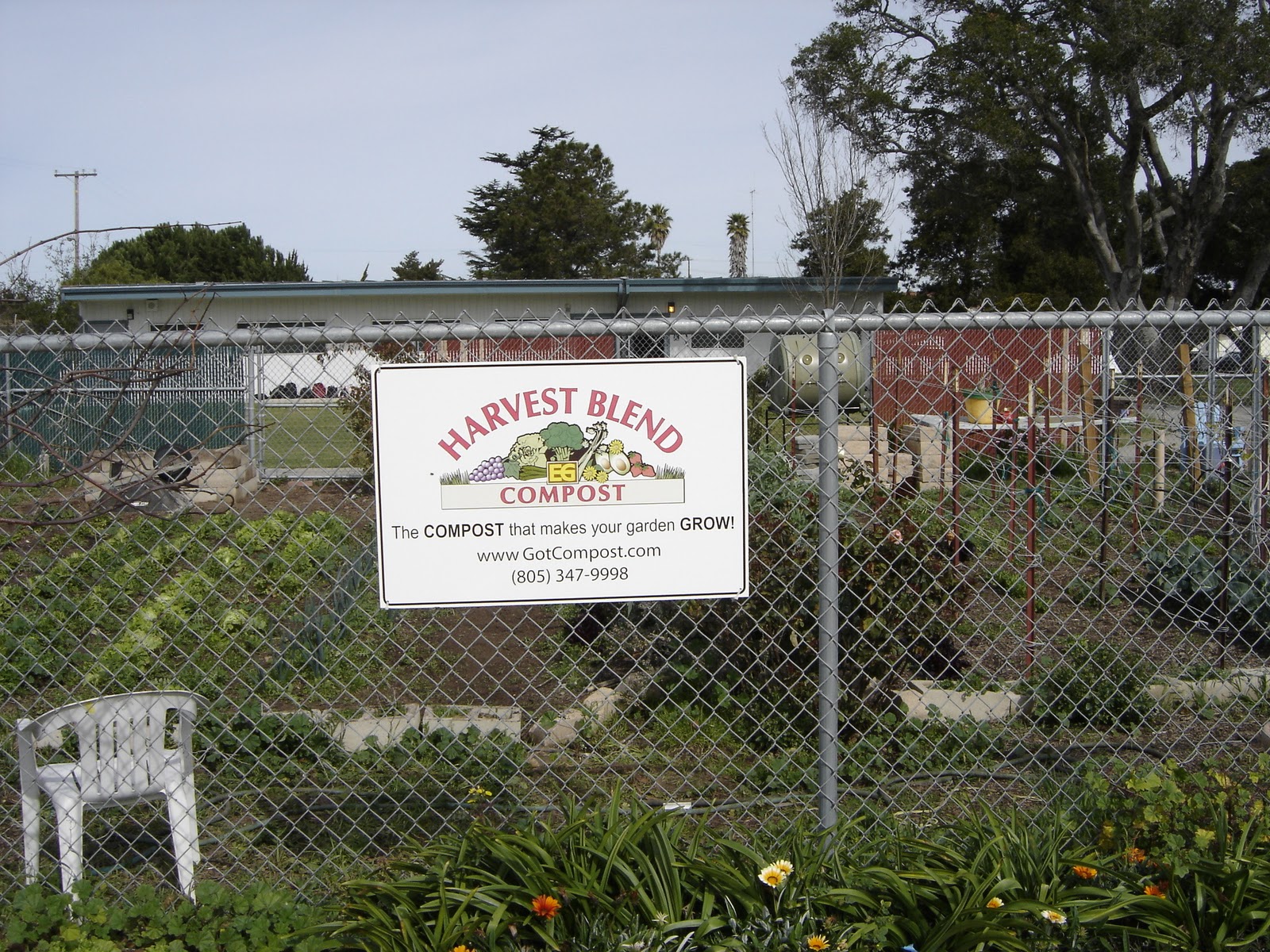 |
| Orcutt Jr. High School Garden - growing strong with compost |
Do our children know where food comes from? Many would answer McDonald’s, Taco Bell or whatever grocery store their family frequents. Given the fact that our children are facing a health crisis - we need to go back to where food begins: the garden. And if we think about it, aren’t school gardens the perfect learning environment?
School gardens are a powerful way to involve our children in a lifelong love of learning. The garden engages students by providing an active environment for students to observe, discover, experiment, nurture, and learn. It is a living laboratory where lessons are drawn from real-life experiences rather than textbook examples, allowing students to become active participants in the learning process. Math and science curriculum are supported in a school garden, while social skills are strengthened as students learn to work together toward a common goal.
And the end product isn’t bad either - healthy food! Produced through cooperation, physical labor and knowledge gained in this outdoor “classroom”, students may choose to share their harvest with the school cafeteria or donate it to a local food shelter. Whatever the final destination, students have created something good where before there was simply a plot of land.
Another lesson to be learned from a school garden is environmental responsibility. Creating a healthy foundation for a growing garden is vital to the garden’s success. To replenish lost nutrients, soil should be amended with compost before planting. Adding good microbes to the soil increases soil organic matter and water holding capacity, delivering oxygen and nutrients to growing root systems. Plants then have what they need to grow strong and healthy.
Now that the garden has produced all this good food and it’s been enjoyed as delicious lunch or dinner, what happens to the food waste? We can “Complete the Cycle” by recycling those scraps, transforming them into compost. We’ll be saving literally tons of room in our landfill while creating a healthy soil product for future crops. Naturally!
Ten Reasons Why School Gardens are an Excellent Idea
1. Magic happens when a child harvests a vegetable he or she has planted and nurtured. The child will want to eat it! It will increase interest and improve attitudes towards eating fruits and vegetables.
2. Students will learn where food really comes from - a carrot grows in the ground, a green bean on a vine and Brussels sprouts on a stalk!
3. School gardens foster an increased awareness of environmental issues. They will learn to respect and care for the soil, where our food comes from.
4. They will get to share their bounty with their classmates. Eating with their peers is one of the most important motivators for children to try new foods.
5. It gives children an opportunity to be outside and away from computer screens and, at the same time, significantly increase science achievement scores.
6. They improve self esteem, behavior, social skills and interpersonal relationships as well as help develop life skills including working with groups.
7. Research shows that hands-on gardening and cooking programs are the two things that are actually effective in behavior change; they get kids to eat more vegetables.
8. The gardens are beautiful spaces that connect students to their school and help them develop a sense of pride and ownership, which in turn improves attitudes towards school and discourages vandalism.
9. They provide opportunities for community involvement including neighbors, volunteers, parents, and local businesses.
10. School gardens promote good nutrition and exercise. The health of our kids and the health of our planet are fundamentally connected.
Subscribe to:
Posts (Atom)