Wednesday, March 30, 2011
Got Compost: Healthy Soil – vital to a healthy landscape
Got Compost: Healthy Soil – vital to a healthy landscape: "Every combination of soil type and land use calls for a different set of practices to improve soil quality, but there are a few standards th..."


Monday, March 28, 2011
Got Compost: Healthy Soil – vital to a healthy landscape
Got Compost: Healthy Soil – vital to a healthy landscape: "Every combination of soil type and land use calls for a different set of practices to improve soil quality, but there are a few standards th..."
Healthy Soil – vital to a healthy landscape
 Every combination of soil type and land use calls for a different set of practices to improve soil quality, but there are a few standards that are commonly used in most situations.
 Addition of organic matter
Periodic adding of organic matter is vital to many aspects of soil quality. Organic matter may come from crop residues at the surface, cover crop roots, animal manure, green manure, compost, and other sources. Organic matter, and the organisms that eat it, can improve water holding capacity, nutrient availability, and can help protect against erosion.
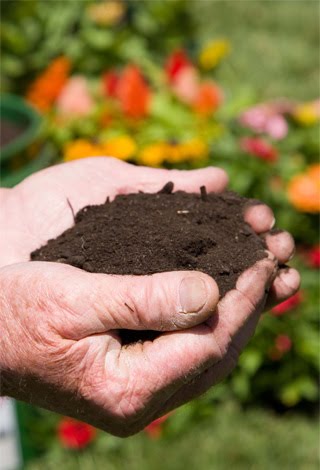
Whether your soil is naturally high or low in organic matter, amending soil with compost every year is undoubtedly the easiest and most important way to improve and maintain soil quality. Regular additions of compost will improve soil structure, enhance water and nutrient holding capacity, protect soil from erosion and compaction, and support a healthy community of soil organisms.
Practices that increase organic matter include: applying compost/amending soil with compost, lawn top dressing with compost, grasscycling, choosing crop rotations that include high residue plants, using optimal nutrient and water management practices to grow healthy plants with large amounts of roots and residue, growing cover crops, using low or no tillage systems, and mulching.
Avoid excessive excavation
Disturbing/excavating soil can trigger excessive organic matter degradation, disrupting soil structure, causing compaction. Reducing soil damage minimizes the loss of organic matter and protects the soil surface with plant residue. Compost has been used for years to regenerate exhausted, compacted, contaminated and marginal soils. It is critical to revitalize soil health following disturbance of a site through excavation, tilling, remediation, leveling, grading, cut & fill and fire damage.
Carefully use fertilizer and pesticides
In this century, pesticides and chemical fertilizers have revolutionized U.S. agriculture. In addition to their desired effects, they can harm non-target organisms and pollute water and air if they are mismanaged. Manure and other organic matter also can become pollutants when misapplied or over-applied.
Efficient pest and nutrient management means testing and monitoring soil and pests; applying only the necessary fertilizer and pesticide, at the right time and place to get the job done; and taking advantage of non-chemical approaches to pest and nutrient management such as crop rotations, cover crops, and manure management - organic gardening.
Ground cover should be increased
Bare soil is susceptible to wind and erosion, and to drying and crusting, none of which are conducive to growing healthy plant life. Without healthy vegetation animal life may be impacted, potentially suffering from malnutrition and disease. Ground cover and mulch protect soil, provide habitats for animal life and larger soil organisms, such as insects and earthworms, and can improve water availability. Cover crops, perennials, and surface residue increase the amount of time that the soil surface is covered each year.
Ground can be covered by leaving crop residue on the surface or by planting cover crops. In addition to ground cover, living cover crops provide additional organic matter, and continuous cover and food for soil organisms. Ground cover must be managed to prevent problems with delayed soil warming in spring, diseases, and excessive build-up of phosphorus at the surface.
Avoid soil compaction
Compaction reduces the amount of air, water, and space available to roots and soil organisms. Compaction is caused by repeated traffic and/or heavy play on sports fields. Deep compaction by heavy equipment is difficult or impossible to remedy, so prevention is essential. Adding Harvest Blend Compost opens up compacted soils, allowing oxygen and water to reach parched root systems, helping to create a lush, vibrant lawn and garden. Naturally!
Need compost for your spring project? Contact one of our handy Field Reps at Info@HarvestBlendCompost.com
Locate a Harvest Blend dealer near you on Google Maps http://maps.google.com/maps/ms?hl=en&gl=us&ptab=2&ie=UTF8&view=map&msa=0&msid=110019273164066754411.00044b6980a8eeffc68db&ll=35.021%2C-120.184937&spn=1.612692%2C2.614746&z=9
Tuesday, March 15, 2011
Got Compost: Top Dress Your Lawn - the Natural Way to Go Green!...
Got Compost: Top Dress Your Lawn - the Natural Way to Go Green!...: "It’s spring once again. Time to take stock of your surroundings and make some needed improvements, especially after our winter weather has d..."
Top Dress Your Lawn - the Natural Way to Go Green!
 It’s spring once again. Time to take stock of your surroundings and make some needed improvements, especially after our winter weather has done a number on our landscapes. And what’s the area that suffers most? That’s right, our lawns! Luckily for us, there’s an easy way to liven up turf without a lot of hassle.
A lush, green lawn requires healthy soil as its foundation, but it’s difficult to make changes to the soil once grass has been established. Most gardening recommendations include “working” organic matter into the soil through digging or tilling before planting, but this can’t be done once the grass has grown. So what’s a homeowner to do with an established lawn that’s in need of some serious help?
When done the right way, the technique of “top-dressing,” or adding a thin layer of compost over your lawn, can improve the soil without harming the existing turf. Top-dressing gradually improves soil over time. As organic matter breaks down, it filters through the existing soil to improve texture and overall health. Top-dressing:
Provides nutrients to the soil
Adds beneficial Microbial Activity
Increases Water Holding Capacity
Suppresses Certain Plant Diseases
Increases Infiltration and Permeability
Stabilizes Soil PH
Increases Humus content, helping to bind sandy soils
Improves drainage and drought-resistance
Evens out the terrain
Reduces the need for supplemental fertilizers
Transforms your lawn into organic, low-maintenance, healthy turf
When to Top-Dress
Ideally, do it in early fall or spring since you’ll want to give your grass time to grow through 3-4 more mowings before temperatures change, especially if you are overseeding. There a 2 methods of Top-Dressing: Quick & Easy or the Professional way (aerate before top-dressing)
Quick & Easy Application
- For best results, mow the turf short, approximately 1½ inch.
- Apply 1/4 inch to 1/2 inch of Harvest Blend Compost over existing turf (0.80 to 1.60 cubic yards per 1000 sq. ft.)
- Work compost into turf with a rake. You can use the back of a wide 'Landscaper's' rake to spread the mix and 'brush' it into the grasses of the lawn. A good stiff broom will also do the trick. Make sure that the compost does not smother the grass. The grass should be showing through the Compost top dressing. The compost will replenish organic material in the soil with the result that the soil does a better job of holding moisture and nutrients for use by the grass. Compost is naturally full of air channels, so it does not block the air and moisture from traveling into the soil.
- Water thoroughly after application.
Purchase Compost for Top-Dressing: You can find a Harvest Blend dealer near you by clicking here. If you’d like to speak to a Harvest Blend Field Rep, email Info@HarvestBlendCompost.com or call (805)925-2771.
Top-Dressing – the professional way
- For best results, mow the turf short, approximately 1½ inch.
- Flag all sprinkler heads and valve covers to avoid any damage during aerating process.
- Aerate the area before top dressing using a commercial aerator or dethatching machine from a local rental store. This opens up the compacted soil to allow oxygen and water to penetrate. After aerating the turf the lawn should look like it is covered with cigar butts. (Do not worry, they will disintegrate and disappear within a few weeks.)
- Apply 1/4 inch to 1/2 inch of Harvest Blend Compost over existing turf (0.80 to 1.60 cubic yards per 1000 sq. ft.)
- Work compost into holes and turf with a rake or drag unit. Use the back of a wide landscaper's rake to spread the mix and brush it into the grasses of the lawn. A good stiff broom will also do the trick. Make sure that the compost does not smother the grass. The grass should be showing through the compost top dressing. The compost falls into the aeration holes to replenish organic material in the root zone. The soil will now do a better job of holding moisture and nutrients for use by the grass.
- Water thoroughly.
You can find a Harvest Blend dealer near you by clicking here. If you have questions or concerns, contact one of our friendly Harvest Blend Field Reps: email Info@HarvestBlendCompost.com or call (805)925-2771.
Harvest Blend Compost - We Build Healthy Soil. Naturally!
Friday, February 25, 2011
Got Compost: Garden Dirt: How to Plan a School Garden
Got Compost: Garden Dirt: How to Plan a School Garden: "School gardens can provide an environment in which students can learn to work with teachers, parents and neighborhood volunteers while growi..."
Garden Dirt: How to Plan a School Garden

School gardens can provide an environment in which students can learn to work with teachers, parents and neighborhood volunteers while growing plants and learning the relationship between people, plants and nature. The lessons that are taught at the garden site are limited only by one's creativity. School Gardens are a special kind of learning center. Like libraries, they need responsible and knowledgeable people to do all the jobs necessary to maintain them as functional places in which children will learn. They should be seen as permanent additions and must be utilized year-round. Below is a framework you might take into account before starting your garden. A recent survey by the California Foundation for Agriculture in the Classroom found that more than 60% of the students thought that cotton comes from sheep and vegetables come from the store. There is clearly a need for agriculture education for urban students. In addition, gardens create enthusiasm for learning, encourage nutrition and foster team-building.
Step 1 - Form a Garden Committee
As a teacher, you don’t have enough time to do it all. You’ll need a team to work the garden, find funds to support the garden, schedule educational activities, find and train volunteers, research and distribute information. Form a garden committee from a pool of dedicated people with those skills, and you’ll increase the success of your program. Look for volunteers among the school staff, parents, and local community. Or if you know of a gardener, ask that person to volunteer or to recommend another gardener. Find out who is interested in being involved by sending out a flyer announcing a meeting. Personally announcing the meeting to local groups (PTA, Rotary Club, teachers, churches, senior citizen centers, local garden clubs, etc.) is even more effective. Most school sites have websites and Facebook pages – posting your flyer on the internet is a great way to get a response!
Step 2 - Define the purpose and objectives of your garden.
Every school garden must fulfill some need or objective. This is why each garden is unique. All teachers utilize the garden as a learning aid. For some teachers it may reinforce natural science classroom studies. For others it may reinforce social studies. Some teachers may utilize the garden across all curriculums. Whatever your needs are, by addressing these issues, you will have a better understanding of the work involved in this stage.
Step 3 - Layout your students gardening activities
By outlining objectives early on, you will have the opportunity to look at your lesson plans to see when and what types of garden lessons are needed. If you need help finding educational exercises and activities, there are many resources available for teachers. You will need to decide which groups of students will be doing what and when, and determine how bed space will be distributed. The experiences and input from your garden committee will be helpful at this stage. This is your opportunity to schedule certain activities at specific times or assign jobs to your volunteers.
Step 4 - Define a year-round garden plan
You have identified what your garden will be like while school is in session. But now, you need to think about your garden during summer break. The main question is, "Who is going to keep this garden maintained until school starts?" "How do you want the garden to look on the first day of school?" A year-round garden plan will account for any school break. After all, we wouldn’t want all that hard work to go to waste over the summer now, would we?
Step 5 - Choose a permanent garden site and design your garden
Your garden site should be in an area that receives plenty of sunlight, has good drainage, and is close to water, electricity and is available to students, volunteers and teachers. The site should have enough room for your garden, tool storage, and students. Maintaining a large garden will use up a good deal of time and energy so select a relatively small area. Be sure to start your garden with the best foundation: healthy soil. Amending soil with Harvest Blend Compost will add structure and nutrients to compacted soil, enabling young plants to grow strong and healthy. Compost increases soil porosity and moisture retention.
For more info, visit www.GotCompost.com
If you need compost to get your garden started, just email us at Info@HarvestBlendCompost.com or EDUCATION@ENGELandGRAY.com
The following concerns should help you decide where plants will grow best:
- A Vegetable garden needs 5-8 hours of full, direct sun every day for plants to be healthy - Hoses are heavy and often can't be left in the schoolyard. You will want to build your garden as close as possible to a water spigot or hose bib. Or install one near your garden site.
- Drainage - Most plants will die if they sit in soggy soil. Make sure that the site you choose isn't the lowest place on campus. Watch where water sits longest after it rains and you'll know where you don't want to build your garden. You can build a garden on asphalt by using raised beds. If you are going to use soil that is already on campus, it is important to have it tested by a reputable company. Some vegetables can become unhealthy to eat if they are grown in contaminated soil.
- Access - The garden needs to be close enough to classrooms that it can be used regularly. A garden that is out of sight is hard to monitor, maintain and enjoy!
- Tool Storage - Choose a location to store and secure tools. Make sure it’s close to the garden so transporting tools isn't too difficult.
6 - Build your Garden according to plan
Now is when it all comes together - when teachers, volunteers, students and their parents pool their resources and build a positive addition to the school.
Resources:
Need Compost? email Education@ENGELandGRAY.com.
Welch's Harvest Grant: http://www.scholastic.com/harvest/register.htm
Gardening with Kids: http://www.gardeningwithkids.org/info.html
Subscribe to:
Posts (Atom)