Search This Blog

Showing posts with label recycle. Show all posts

Tuesday, December 11, 2012

T'is the Season to - Recycle!

The most wonderful time of year? Maybe. Trashiest time of the year? No question.
Boxes, Styrofoam, packaging, wrapping paper, disposable plates, cups and utensils, bottles, cans and food waste - our trash bins overfloweth. But there are ways we can minimize the amount of waste we produce. Mainly, remember the simple phrase "reduce, re-use, recycle" - and they're in that order for a reason.
Reducing what we buy and consume will have the greatest impact on the environment. That includes the number and type of gifts we purchase and how we acquire them, as well as careful menu planning related to the number of actual guests expected.
Look at your trash from a fresh point of view. Getting rid of one bag of trash this season may seem like a small dent in light of America's mountain range of landfills, but if every household filled one fewer bag, imagine the difference we could make.
Meal planning: reduce before eating that big meal - greening up usually takes a little extra time and thought, but it’s well worth the effort. Here are two options for “waste reduction”:
Casual option: Look for compostable tableware and bags – they may cost a little more than the run of the mill plastic stuff, but you’ll be “Completing the Cycle” by re-using recycled materials. And don’t throw the compostable items in the trash. Does your community collect food waste? If so, be sure to place your compostables in the food waste bin. It may look like trash, but these are valuable natural resources that can and should be recycled into compost. Note: paper plates and cups advertised as biodegradable are made to degrade in a commercial composting facility (read the fine print on the package). Added to a small, home compost pile, they may take many months to degrade.
For more info on Compostable Events and Food Waste click here
Formal option: A meal served on china surrounded by silverware, glasses and cloth napkins will take longer to clean up than disposable dishes and plastic ware (taking labor to buy them, and time and fuel to drive to the store). But china and glass are classier, and you can recruit guests to pitch in after dinner – put on your favorite Christmas tunes and the time will fly.
Tips for a Greener Christmas:
Designate a recycling bin for guests to use, and asking them to bring containers for leftovers. Remember to buy local!
And what about trees? Even environmentalists debate whether a live-cut or artificial tree leaves a smaller footprint.
Live trees provide habitat for critters, are a renewable crop, and when grown locally, create local jobs. Making an event out of visiting a tree farm to cut a tree, have a wagon ride and drink hot cocoa can be a pleasant family memory. Note: don’t send your trees to the landfill – recycle ‘em! To properly prepare your Christmas tree for recycling, make sure to remove all ornaments, tinsel, and stands. Trees with stands and flocked trees won’t be accepted and can’t be recycled. Trees over six feet should be cut in half. Visit www.lessismore.org for more info on Christmas tree recycling and scheduled pick up in your area.
An artificial tree re-used for 10 or 20 years would be cheaper and result in less consumption than buying a live tree every year. However, it can't be recycled and is not biodegradable, so when thrown out, it will be a landfill lump.
Economics can be a challenge of going green. Green goods sometimes cost more, but on the other hand, the prices of trash disposal, pollution and energy continue to rise. Complete the cycle by re-using recycled materials and you’ll be helping your community (and have a Greener Christmas.) Naturally!
For more info: visit www.GotCompost.com  


Friday, April 27, 2012

'Mini' Possibilities! Don't Let Lack of Space Keep You from Gardening

We’re so lucky. We live in an urban area but have enough room to support several garden areas and 2 small compost piles; used to supplement the fresh, bulk compost we purchase locally. This month we’ve enjoyed fresh lettuce (4 varieties), radishes and carrots, so it’s like a ready-made salad growing in our back yard! We’ve even had artichokes – a little on the small side, but delicious! Tomatoes, cucumbers and bell peppers are started – so before long we’ll have a real salad bar of veggies to choose from.
OK, so our veggie loving, Bay Area daughter visited us this past weekend; ooh-ing and ahh-ing over our mini harvest. Living in a small, upstairs apartment in the city, she resorts to shopping Trader Joe’s and the weekly Farmer’s Market in order to satisfy her ‘green tooth’. Of course we loaded her up with bags of lettuce, carrots and the like; but she wanted to know how to create her own little ‘slice of heaven’ with only a cement patio.
This got us to thinking…there are many people who never try gardening due to space issues. If they could see the pots of Tom Thumb Lettuce growing along our driveway, they might want to try it for themselves. One way to experience the joy of planting, tending to and then devouring your own crops is to find space in your local Community Garden. These plots are normally very affordable and allow you to get outside, get your hands dirty and plant (mostly) whatever you want.
Another method is container gardening. Like our mini heads of lettuce growing in terra cotta pots, many veggies do just fine in a confined space. Look for key words like: bush, compact, and space saver when seed or transplant shopping. The color of container matters! Be careful when using dark colored containers because they absorb heat which could possibly damage the plant roots. If you do use dark colored pots, try painting them a lighter color or shading just the container, not the plants.
Size: This is one case where size does matter. For larger vegetables like tomatoes and eggplants, you should use a five gallon container for each plant. You can grow these plants in two gallon containers; but you’ll need to give the plants quite a bit more water.
Soil: Raised-bed gardens have a lot of advantages. They elevate plants so it’s easier to work with them. The soil stays loose and friable with fewer weeds so plant roots can grow easily. Getting the right soil mix for your raised-bed garden can make all the difference in the success of your garden.
Please, don’t use regular garden soil to fill containers. Ordinary garden soil is loaded with weed seeds as well as diseases and even bugs – all of which can undo all your hard work. Ordinary garden soil may also contain a large amount of clay or silt that packs down in the box, closing off pore spaces that are needed to hold water and air for the roots.
Raised beds should therefore be filled with a weed-free mix of sand, loamy soil and compost. You can make your own, using Harvest Blend Compost – available at authorized dealers on the Central Coast. A 4-by-8-foot box, 8 inches deep, will take just under a cubic yard of mix to fill. If you use a commercial ‘three-way mix’ it can be heavy and a little short on nutrients. In this case, you might want to add an equal amount of compost to the mix to improve its texture.

What to plant?
The earth’s the limit! Veggies from Arugula to Zucchini (and everything in between) can be grown in containers. We don’t want to take up more space here so click the links for suggestions and valuable planting tips. Really, as long as you begin with healthy soil (thanks to organic matter in that compost) and water accordingly, you’ll be enjoying your own fresh, healthy mini harvest this summer. Naturally!
http://www.gotcompost/ for all the dirt on compost.

Friday, October 28, 2011

Cover Crops & Compost - Protect Your Soil

Why go to all the trouble of planting a crop you won’t be enjoying at the dinner table? There are some important reasons not to let your vegetable plots and planting beds go naked in the winter. Amending soil with compost and planting cover crops will keep soil healthy for next year's harvest by increasing soil fertility.
Using leguminous (from the pea family) seed for cover crops is referred to as "green manure." They’re used to manage a range of soil macronutrients and micronutrients. Of the various nutrients, the impact these cover crops have on nitrogen management has received the most attention from researchers and farmers, because nitrogen is often the most limiting nutrient in crop production.
Here are more specific reasons to plant compost and cover crops -- legumes, grains and grasses -- this season:
1.      Soil quality improvements--Soil tilth is improved whenever a plant establishes roots and grows into compacted areas. Water infiltration is improved as well. When a field lays fallow for a period of time, the surface tends to seal and water will run off. Cover crops protect the soil surface and reduce sealing. Also, beneficial organisms in the soil, such as earthworms, thrive when fresh plant material is decomposing. Organic matter levels tend to improve with the addition of cover crops.
2.      Erosion control--Cover crops reduce wind and water erosion on all types of soils. By having the soil held in place by cover crops during the fall, winter, and early spring, loss of soil from erosion is greatly reduced.
  1. Fertility improvements--Legumes can add substantial amounts of available nitrogen to the soil. Non-legumes can be used to take up excess nitrogen from previous crops and recycle the nitrogen as well as available phosphorus and potassium to the following crop. This is very important after manure application, because cover crops can reduce leaching of nutrients.
  2. Suppress weeds--A dense growth of winter rye or other cover crop can suppress weeds by soil shading. Allelochemicals (toxic plant chemicals) from cover crops suppress the growth of other plants.
  3. Insect control--Beneficial insects, such as ladybugs or ground beetles, may be encouraged by planting cover crops.
So, In addition to protecting your beds from sun, rain and wind, compost and cover crops add/help build organic matter and hummus content, increase microbial activity, inhibit weed growth and increase your soil's fertility. In fact, plants leave 80 percent of their organic material in the soil, even after they're removed, thanks to their root structure. Why would you want to risk losing all that great organic material by just leaving it out to the elements?
What to plant?
Biomass crops are usually grains like wheat, rye, barley and oats. Grains should be planted in the fall while legumes and vetch can be planted almost any time except during winter freeze periods. A biomass crop also will protect your soil and add carbon to your soil. We just planted a cover crop after harvesting our last vegetable crop and ordered our seed from http://www.groworganic.com/organic-soil-builder-mix-raw-lb.html. Of course, we cleared the plot and amended soil with Harvest Blend Compost. It's easy to get your grain seeds and mixes into the ground. Just rake the soil and "broadcast," or toss, seeds randomly. In no time, you’ll notice little green sprouts making an appearance.
Finally, you can mix legumes, grains and other crops to get a variety. But be sure to pull all the cover crops up before they go to seed in March or May or you'll find yourself overwhelmed with weeds later on.  For info on amending soil with compost, visit www.GotCompost.com

Thursday, August 25, 2011

Soil. It's What You Find Under Your Feet!

What’s the difference between soil and dirt? Dirt is what you find under your fingernails. Soil is what you find under your feet. Think of soil as a thin living skin that covers the land. It goes down into the ground just a short way. Even the most fertile topsoil is only a foot or so deep. Soil is more than rock particles. It includes all the living things and the materials they make or change.
Soil Organic Matter (SOM) is that fraction of the soil composed of anything that once lived. Most soil lacks enough organic matter to support healthy plant growth. The Strive for 5% campaign was developed to help us increase SOM for healthy soil!
Truly healthy soil has between 3% and 5% organic material. That level can be maintained ONLY IF you add organic matter to the soil at the surface year in and year out. The plants, the earthworms, and the microbes need that additional matter to sustain a healthy soil. In the woods and prairies, that added organic matter came from dead leaves or dead grasses decomposing each year. We need to replicate that process in our lawns to be able to maintain a healthy organic content in our soil.

But few residential landscapes have soil this rich with organic material. The reality is that the soil under American lawns typically contains less than 1% organic material. This is because over a ten or twenty year period not only was no new organic material introduced, but the most abundant natural sources such as leaves and grass clippings were regularly collected and disposed of in our weekly trash pick-up.
A healthy soil needs a steady source of new organic material. It is constantly decomposing and yielding nutrients for the grass plants and must be replaced. The black fibrous material (called "humus") that results from the decomposition of grass clippings and other organic material eventually has little food value left. But, it does have enormous value in aerating the soil, in storing water, and in feeding key microorganisms needed for other tasks.

While leaving grass clippings on the lawn provides some organic material, it is not enough to consistently provide 3 or 5 %. You must provide more. And how may I provide more organic matter, you might ask? The answer is simple; STA Certified Compost! Applying a layer of compost to lawns twice a year (called 'top dressing') adds vital nutrients, increasing soil's water holding capacity and soil structure. Top Dressing is widely recognized by landscape pros as the most environmentally responsible method of lawn care. Compost is also beneficial for erosion control, turf establishment, tree & shrub backfill mix and used in flower & vegetable gardens for vibrant blooms and healthy veggies.
STA Certified Harvest Blend Compost can do many things for your soil. Benefits include:
·        Improving soil structure, porosity and density to ensure a healthier root environment
·        Infiltrating heavy soils, thereby reducing erosion
·        Increasing water holding capacity of soil so that water is used more efficiently
·        Stabilizing pH and improving the soil’s ability to hold nutrients
·        Supplying valuable microbes, micro and macronutrients and organic matter to the soil environment
·        Helps to suppress soil-borne plant pathogens
·        Binds and degrades specific pollutants
We encourage you to schedule a visit to one of the participating STA composting facilities to get a first hand look at the commercial composting process. To locate a facility in your area, visit http://www.compostingcouncil.org/ & click on "Buying Compost" under the Resources tab. Please visit the US Composting Council’s website for more information on the Consumer Compost Use Program and all issues related to compost.
And if you need compost for your next landscaping project, be sure to give us a call us @ (805) 925-2771 or email Info@HarvestBlendCompost.com. For the scoop on compost visit www.GotCompost.com

Friday, July 8, 2011

New Brown Bin = Green Waste Recycling

Toward the end of June 2011, Santa Maria City residents were introduced to our community’s new Green Waste Recycling program. Getting to this point has been a long road but thanks to the City’s Utilities Dept., headed by Rick Sweet, we’re on the road to becoming a “greener” community.

Green Waste Recycling may be new to our city but many other municipalities have been separating, collecting and composting this valuable resource for years. Santa Maria tried out a pilot program in February 2009, with every other week yard materials collections for three test areas. Collected materials were delivered to Engel & Gray Regional Compost Facility where they were recycled into premium compost, some of which was used to top dress City parks.
Each household in the pilot area diverted an average of over 360 pounds of yard materials from the landfill for a total of over 280,000 pounds of yard materials recycled during the five month pilot program. The success of this project saved valuable space within the City landfill.
Blue Bin, Brown Bin, Blue Bin, Etc.
By now we’re all used to placing our blue recycling containers out along with the trash bins every other week. All we'll need to remember is to alternate the blue can with our new brown lidded bin; instead of tossing leaves, brush and grass in the trash, we can now recycle these valuable resources by tossing them into  the new container that will be collected every other week. One week: blue recycle container. The next week: Brown recycle container. It's that simple.
Our Green Waste recycling program will extend the life of the landfill and defer the capital costs to build a new landfill. In addition, the Solid Waste per Capita Disposal Measurement Act requires cities and counties not only to meet waste diversion requirements for their landfills, but also to implement a number of recycling programs such as a Green Waste program.
What can and cannot go into the Green Waste recycling container?
ACCEPTABLE: Leaves, fallen fruit, grass clippings, weeds, plant prunings, small branches, clean wood, plants with little soil
NON-ACCEPTABLE: Plastic bags, glass, paper, trash, animal waste, diapers, palm or yucca trimmings, painted, glued or pressure treated wood, rocks, gravel, dirt, asphalt, cement, metal, paint, oil, liquids, hazardous materials
For added convenience, refer to the quick guide label of acceptable/non-acceptable materials shown on the lid of your Green Waste container (brown lid).
How does the program work?
Curbside collection of Green Waste (containers with a brown lid) will be every other week, on weeks alternating with Recycling collection (containers with a blue lid), on your regular trash collection day. To assure pick-up, containers must be placed curbside by 6:30 a.m. on your scheduled collection day. Please do not place your Recycling and Green Waste containers out the same week. Refer to your collection calendar for extra help.
Where do I place my container out for collection?
Please place your Green Waste container next to your regular refuse container, allowing five feet of clear space around each container. If your containers are located on the street, please make sure no vehicles are blocking access to them.
Where can I get more information?
For more detailed information about the Green Waste program, along with frequently asked questions and answers, visit the City’s web page or to request a copy of your collection schedule, call 925-0951 ext. 7270.


Tuesday, May 3, 2011

Compost – Buy it. Try it. My, it works!


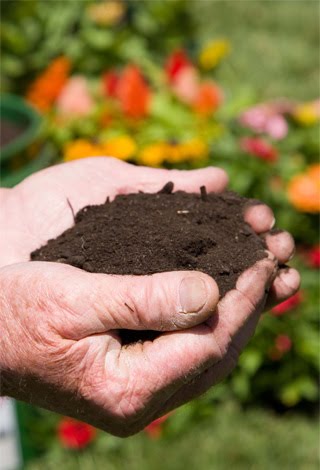
This is what compost should look like!
It's International Compost Awareness Week - the one week we celebrate all things "Compost" – and the reasons compost is the natural choice for responsible soil care. Much of the public has a concept of compost; the heap of food scraps and yard waste DIY-ers keep out back, tending month after month, hoping for one wheelbarrow of prized “black gold” to distribute over an entire yard.

But if you don’t have a year to devote to a compost pile and you’d like to get started on amending soil for your spring & summer gardens. You can buy compost now. That’s right! “Compost” isn’t only a verb; it’s a ready-made product that may be purchased locally. The hard part is in knowing what to look for? How can you tell high quality, nutrient rich compost from the “other" stuff?
The difference between good and not-so-good compost is similar to choosing fresh produce over fast food. Your first stop might be one of the large home improvement centers, where you’ll find bagged products with hard to decipher labels, touting a product that’s sort-of-like-compost. The cheap, too-wet/too-dry, heavy, generic stuff without a lot of info on the label, baking in the sun at a big box store isn’t our first choice (or second, or third, or…) It shouldn’t be anyone’s choice, really. The labels and names on cheap bags of “Maybe Compost” are generally somewhere between non-existent, confusing and extremely misleading (just like the materials inside the bag). Worst of all, this low-rent spread has probably been anaerobic inside that bag for a long time (no air means no live microbes to improve the soil).
Small, local nurseries may carry high end, expensive bagged products and possibly some bulk amendments. Sure, you’ll be able to buy products that say they will improve your landscape, but will they be a quick fix or the long term solution your soil is in need of. A key factor is in knowing where your compost originated. Is there a compost facility nearby? If so, you know for certain they are kept to the highest standards of production; destroying harmful weed seeds and pathogens in order to gain the Seal of Testing Assurance label -always look for compost that is STA Certified.
An ideal product for all your landscaping needs is Harvest Blend Compost, produced on the Central Coast by Engel & Gray Regional Compost Facility. As consumers, one of the most powerful things we can do is to purchase products made locally from recycled materials. Our compost is made from locally collected/recycled organic materials, much of it diverted from our landfill. The composting process occurs when micro-organisms break down organic material (leaves, twigs, biosolids & manures) into a dark crumbly soil amendment.   The end product of this recycling process is Harvest Blend Compost; a stable humus product that is rich in nutrients and micro-organisms.  
Compost has many uses; as a soil amendment compost adds structure and vital nutrients young plants need to grow; as top dressing, compost opens compacted soil, increasing oxygen and soils’ water holding capacity; use in gardens before planting for vibrant flower beds and healthy vegetables. Stop by one of our dealers for free application sheets to help you do the job right.
All natural STA Certified Harvest Blend Compost is available at authorized dealers near you, from Paso Robles to Santa Barbara. For a dealer near you Click and enter your Zip in our dealer search box
Final note: Composting is a complex process by which raw ingredients are transformed by living organisms and processes. Drying is not the same—not even close. Dried something-or-other can’t do all the wonderful things that living compost does. Naturally!
Celebrate International Compost Awareness Week! Buy Compost

Friday, April 22, 2011

Celebrate Earth Day - build healthy soil!

Gardeners celebrate the Earth every time they plant a seed or harvest a crop. Spring is the natural time to remind ourselves that we may need to do a little more to “go green” in our gardens. Here are some tips to do just that!
Buy plants in biodegradable pots. Ball Horticultural Co. and Bonnie’s Plant Farm – which provide millions of transplants to garden centers across the US – are now providing seedlings in biodegradable pots that you plant right in the ground. We’ve used these pots and like knowing we’re doing a good thing for the Earth.
Start your own seedlings in biodegradable pots, such as Cow Pots. Or recycle containers that you already have on hand. We incorporate recycling by starting seeds in foam egg cartons, newspaper pots and 2-liter drink bottles that have been cut in half. How about planting an herb garden in an old gift basket?
Recycle or reuse plastic garden pots. Check with the nursery or garden center when you buy plants to see if it will take the pots back and reuse or recycle them. Many large landscape supply stores do this, so it’s worth it to ask.
Use Compost! If you don’t have the time or energy to make and tend your own compost pile, and it does take both, remember that compost is readily available at many nurseries and landscape supply centers. Compost is made from recycled organic materials, so re-using it to build healthy soil and refresh your lawn and garden, is the perfect way to “Complete the Cycle”. Harvest Blend Compost is the perfect foundation for flower and vegetable gardens. A fine layer of Harvest Blend Compost worked into grass, called top dressing, will make a world of difference; creating a strong, vibrant lawn for family and pets. Click here for all the details.
Be water-wise. Use drip or trickle irrigation and consider reusing some household washing water in the garden. Or use a rain barrel. One inch of rain over 1,000 square feet of area yields 623 gallons. Rainfall at the rate of 1 inch per hour will yield about 10 gallons per minute per 1,000 square feet. It doesn't take long to fill a few barrels of free, un-softened water. The kind of water plants love.
Plant to attract beneficial insects. This is another aspect of using no or fewer pesticides – letting “good bugs” such as ladybugs and praying mantises help you out. Plant for bees, butterflies, birds, and other small wildlife. We humans continue to invade the territory that wild creatures call home, depriving them of places to live, breed, and find the food they prefer. Santa Barbara Botanic Garden will help you discover what plants are native to your area so you can grow them and help repopulate our beneficial wildlife.
Using Harvest Blend Compost to build healthy soil is the most environmentally responsible action you may take in the garden. Naturally!

Friday, January 14, 2011

Humus - Food for Thought!

Boy, what a difference one letter can make! As most healthy eaters know, “Hummus” is a soft food from Greece and the Middle East that’s made from mashed garbanzo beans and eaten cold with bread. Yummy! But take away an “m” and we have "Humus" - another food substance, only we don’t think we'll be spreading this stuff on toast or crackers any time soon. 
In general terms, Humus refers to the organic component of soil.  Humus formation begins when the organic remains of decaying plants and animals meets up with microbial life in the soil.  The carbon compounds contained within the remains were synthesized by the plant or animal when it was alive, and now become food (protein and energy) for the various bacteria, fungi and actinomycetes involved in the decay process. Finished compost is frequently referred to as humus. 
Visit www.GotCompost.com for more info
During humification of organic matter, microbes dismantle most of the sugars, starches, proteins, cellulose and other carbon compounds and use them for their own metabolism.  Most of the nutrient energy absorbed by the bodies of microbes is re-used by other microbes when they die.  Some is mineralized back into plant food and some is transformed into sturdy compounds that build up as elements of humus.
So, we can think of Humus as mainly a gigantic storage battery containing energy that first came from the sun. This energy is used by many varieties of soil organisms that carry out different functions in the soil, like recycling nutrients and changing them into a form that’s usable by plants.  Eventually the plants die and slowly decay in the soil where the whole process is repeated.
The best way to sustain the humus in soil is to amend it with quality compost.  When added to soil, locally produced Harvest Blend Compost will add nutrients and oxygen, increase soil’s porosity and water holding capabilities while providing a lush, healthy landscape for all to enjoy. Adding compost to gardens or as lawn top dressing is, without a doubt, the most environmentally and biologically sustainable way to maintain soil’s health and fertility.  A healthy soil builds strong, vibrant plants which are much more resistant to disease and need less fertilizer. Naturally!

Monday, December 27, 2010

Green: it’s not just for Christmas!

OK. The presents are opened; the remnants of that holiday meal are just waiting to be discarded. Wrapping paper and cardboard – crumpled and stuffed into garbage bags – is reduced to a faint reminder of the recent festivities.

Does this mountain of wasted packaging give you a twinge of guilt? If so, you’re becoming more environmentally responsible and you’ll want to look into reducing this load. What’s the solution? Recycling! And that means your live Christmas tree too!
"The City will begin its citywide curbside collection of Christmas trees Monday, Jan 3rd through Friday Jan 7th ", said Bob Engel of Engel & Gray, Regional Compost Facility in Santa Maria. "Trees will be processed, along with regular green waste, into nutrient rich Harvest Blend Compost to be used as a soil amendment for landscape and agriculture".
Engel & Gray asks that you properly prepare your Christmas tree for recycling: please remove all ornaments, tinsel, and stands. Trees with stands and flocked trees will not be accepted and cannot be recycled. Place your Christmas tree on the curb, at least three feet away from your trash container on your regularly scheduled collection day.Recycling is the environmentally responsible way to dispose your live Christmas tree. Sending them to the landfill is a waste of natural resources. Transforming fresh trees into compost, which is used to make healthy soil and grow more trees, is the perfect way to “Complete the Cycle”.
More Holiday Waste Prevention Tips
You can help reduce the amount of waste generated in Santa Barbara County by taking a few of the following simple steps:
- Flatten, save, and reuse gift boxes, wrapping paper, bows and gift bags;
- Buy cards and wrapping paper made with recycled paper;
- After receiving new gifts, donate old items to a local charity or thrift store;
- Save and reuse holiday decorations (and gift bags) for future years;
- Cut up brown paper grocery bags to wrap parcels for mailing;
- Use comics, old posters, and shopping bags to wrap presents;
- remember: Styrofoam can NOT be recycled. Offer packing peanuts to local private mailing stores. Some companies are using starch based “compostable peanuts” that will dissolve in water or compost piles. Test peanuts by holding a few under running water – if they’re biodegradable, they’ll dissolve.
Now that you’ve recycled that mountain of organic materials, you’re on your way to a brighter, less cluttered New Year. Naturally!
for more info visit www.GotCompost.com

Thursday, December 16, 2010

Dreaming of a Green Christmas? Quit dreaming - it's possible!

The most wonderful time of year? Maybe. Trashiest time of the year? No question.

Boxes, Styrofoam, packaging, wrapping paper, disposable plates, cups and utensils, bottles, cans and food waste - our trash bins overfloweth. But there are ways we can minimize the amount of waste we produce. Mainly, remember the simple phrase "reduce, re-use, recycle" - and they're in that order for a reason.
Reducing what we buy and consume will have the greatest impact on the environment. That includes the number and type of gifts we purchase and how we acquire them, as well as careful menu planning related to the number of actual guests expected. Look at your trash from a fresh point of view. Getting rid of one bag of trash this season may seem like small potatoes in light of America's mountain range of landfills, but if every household filled one fewer bag, imagine the difference we could make.


Meal planning: reduce before that holiday meal - greening up usually takes a little extra time and thought, but it’s well worth the effort. Here are two options for “waste reduction”:


Casual option: Look for compostable tableware and bags – they may cost a little more than the run of the mill plastic stuff, but you’ll be “Completing the Cycle” by re-using recycled materials. And don’t throw the compostable items in the trash. Does your community collect food waste? If so, be sure to place your compostables in the food waste bin. It may look like trash, but these are valuable natural resources that can and should be recycled into compost. Note: paper plates and cups advertised as biodegradable are made to degrade in a commercial composting facility (read the fine print on the package). Added to a small, home compost pile, they may take many months to degrade.
For more info on Compostable Events and Food Waste Recycling:
melissa@lovecompost.com


Formal option: A meal served on china surrounded by silverware, glasses and cloth napkins will take longer to clean up than disposable dishes and plastic ware (taking labor to buy them, and time and fuel to drive to the store). But china and glass are classier, and you can recruit guests to pitch in after dinner – put on your favorite Christmas tunes and the time will fly.


Tips for a Greener Christmas:
Live trees provide habitat for critters, are a renewable crop, and when grown locally, create local jobs. Making an event out of visiting a tree farm to cut a tree, have a wagon ride and drink hot cocoa can be a pleasant family memory. Note: don’t send your trees to the landfill – recycle ‘em! To properly prepare your Christmas tree for recycling, make sure to remove all ornaments, tinsel, and stands. Trees with stands and flocked trees won’t be accepted and can’t be recycled. Trees over six feet should be cut in half.
www.lessismore.org for more info on Christmas tree recycling and scheduled pick up in your area.


An artificial tree re-used for 10 or 20 years would be cheaper and result in less consumption than buying a live tree every year. However, it can't be recycled and is not biodegradable, so when thrown out, it will be a landfill lump.


Economics can be a challenge of going green. Green goods sometimes cost more, but on the other hand, the prices of trash disposal, pollution and energy continue to rise. Complete the cycle by re-using recycled materials and you’ll be helping your community (and have a Greener Christmas) - naturally!


For more info: visit
www.GotCompost.com


And what about trees? Even environmentalists debate whether a live-cut or artificial tree leaves a smaller footprint. Designate a recycling bin for guests to use, and asking them to bring containers for leftovers. Remember to buy local!

Thursday, December 2, 2010

Improve Soil Structure - protect your landscape during the winter months

At this time of year we need to make sure our garden soil is in the best shape possible. Cold temperatures and rain can destroy plant life, especially if soil is compacted, sandy or clay based. It isn’t easy to change a soil's basic texture, but you can improve its structure--making clay more porous, sand more water retentive--by adding amendments.


Compost is the most nutrient rich, readily available soil amendment you can choose to improve soil conditions. It’s jam packed with beneficial microbes tired, sandy and compacted soils are lacking. The organic matter opens up the soil structure, increasing oxygen to plants’ root systems, helping them grow strong.
Compost is composed of the decaying remains of plants and animals. As it decomposes, organic matter releases nutrients that are absorbed by soil-dwelling microorganisms and bacteria. The combination of these creatures' waste products and their remains, called humus, binds with soil particles. In clay, it forces the tightly packed particles apart; drainage is improved, and the soil is easier for plant roots to penetrate. In sand, it lodges in the large pore spaces and acts as a sponge, slowing drainage so the soil stays moist longer.

Though the particular organic amendment you use is often decided simply by what's available at the best price, many experts favor compost over all other choices. Harvest Blend Compost is simply your best choice! It’s registered with the United States Composting Council Seal of Testing Assurance program (STA) – a compost testing, labeling and information disclosure program designed to give you the information you need to get the maximum benefit from the use of compost. Only the highest quality compost is awarded the STA label. It’s your guarantee of excellence!

Adding amendments: when and how
New beds for landscape plants should be amended before any plants go into the ground. For long-term benefits, choose an amendment that breaks down slowly. Shredded bark and peat moss hold their structure the longest, taking several years to decompose. It's a good idea to include compost in the mix as well; though it breaks down in just a few months, it bolsters the initial nutrient supply available to soil microorganisms--and these will contribute humus to the soil, improve soil aeration, and help protect your new plants from some diseases.

In vegetable and flower beds: amend the soil before each new crop is planted. Compost is preferred by most gardeners, since they dramatically improve the soil's structure, making it hospitable to the fine, tiny roots of seedlings. Un-amended soil may dry into hard clods that small roots cannot penetrate, and plants may grow slowly, be stunted, or die as a result. Compost will break down after several months--so be sure to add more before you plant each crop.


To add amendments to unplanted beds, spread the material evenly over the soil, then work it in by hand or with a rototiller to a depth of about 6-8 inches. If your soil is mostly clay or sand, spread 4 to 5 inches of amendment over it; once this is worked in, the top 8 inches of soil will be about half original soil, half amendment. If the soil is loamy or has been regularly amended each season, add just a 2- to 3-inch layer of amendment; you'll have a top 8-inch layer of about three-quarters original soil, one-quarter amendment.

Permanent or semi-permanent plantings of trees, shrubs, or perennials benefit from soil amendment too, but you need to do the job without damaging plant roots. It's often sufficient simply to spread the amendment over the soil surface as mulch; earthworms, microorganisms, rain, and irrigation water will all carry it downward over time, gradually improving the soil's top layer. If the plant isn't a shallow-rooted type (that is, if it doesn't have many roots concentrated near soil level), you can speed up the improvement process by working the amendment into the top inch or so of soil, using a three-pronged cultivator.

Where the climate is generally mild and winters are rainy, amend the soil in established plantings annually after fall cleanup. In cold-winter regions with spring and summer rainfall, do the job as you begin spring gardening.

For more info, visit
www.GotCompost.com If you have questions or concerns about compost and it’s uses, we’re happy to help. Naturally!